
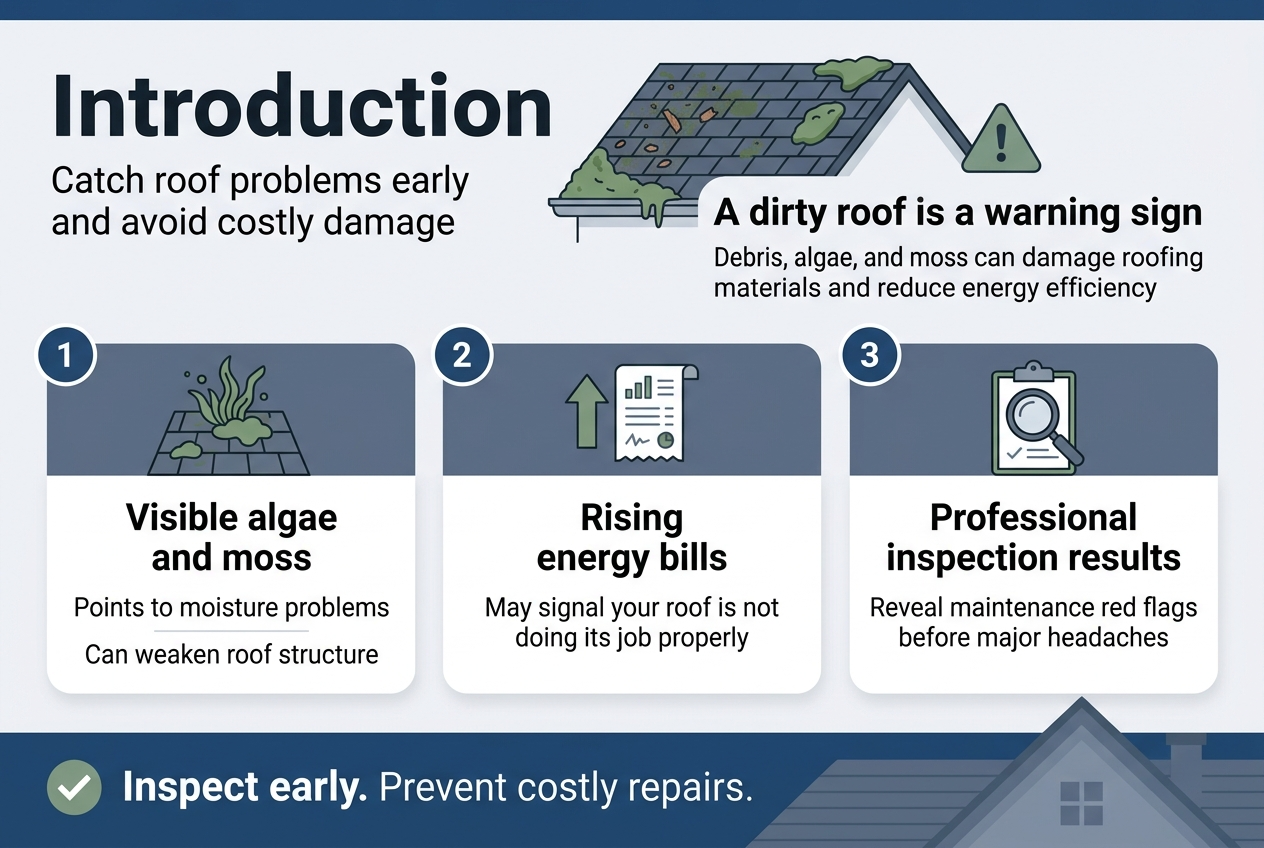
Your roof silently protects your home every day, but neglecting its cleanliness can lead to expensive repairs and safety hazards. Here in Punta Gorda, FL and throughout Southwest Florida, our warm, humid subtropical climate accelerates algae, moss, and mildew growth making roof maintenance more urgent than in most parts of the country. This guide is for homeowners who want to catch roof problems early and avoid costly damage down the road.
A dirty roof isn’t just an eyesore it’s a warning sign that bigger issues are brewing. When debris, algae, and moss take over your roof, they create conditions that can destroy your roofing materials and hurt your home’s energy efficiency.
We’ll walk you through the most telling signs that your roof needs immediate attention, including how visible algae and moss growth points to moisture problems that can weaken your roof’s structure. You’ll also learn why rising energy bills might actually signal that your roof isn’t doing its job properly, and how professional inspection results can reveal maintenance red flags before they turn into major headaches.
Visible Algae and Moss Growth Indicates Moisture Problems
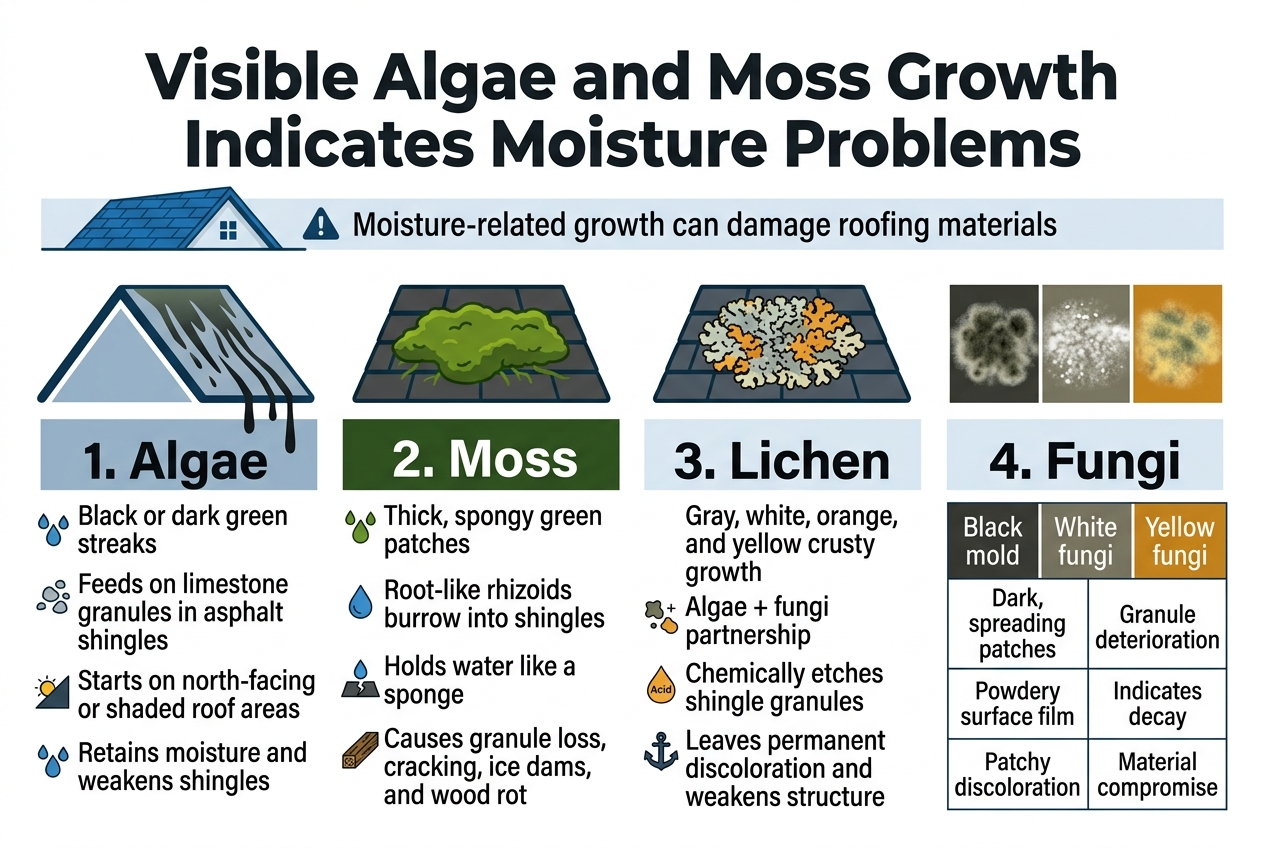
Dark streaks running down roof surfaces signal algae colonization
Those unsightly black or dark green streaks cascading down your roof aren’t just cosmetic issues they’re warning signs of algae taking hold of your roofing materials. Blue green algae, specifically Gloeocapsa magma, feeds on the limestone granules found in asphalt shingles, creating those characteristic dark streaks that seem to appear overnight.
The algae starts small, often in areas where moisture lingers longest, such as north facing slopes or sections shaded by trees. Once established, it spreads rapidly across your roof surface, creating an environment that retains moisture far longer than a clean roof would. This extended moisture exposure weakens your shingles and can lead to premature aging and failure.
You’ll typically notice these streaks becoming more pronounced after rainy periods or in humid conditions. The longer you wait to address algae growth, the deeper it penetrates into your roofing materials, making removal more difficult and potentially requiring professional treatment.
Green patches of moss create water retention and structural damage
Moss thrives in consistently damp conditions and appears as thick, spongy green patches that can carpet entire sections of your roof. Unlike algae, moss has root like structures called rhizoids that burrow into shingle surfaces, creating tiny cracks and crevices where water can penetrate.
These green invaders act like tiny sponges, absorbing and holding water against your roof surface for extended periods. The constant moisture exposure accelerates the breakdown of roofing materials and can lead to:
- Granule loss from asphalt shingles
- Cracking and splitting of roof materials
- Ice dam formation in colder climates
- Structural wood rot beneath affected areas
Moss growth typically starts in areas where debris accumulates, such as roof valleys, behind chimneys, or along roof edges where gutters may overflow. The problem compounds over time as moss traps more debris and creates an even more hospitable environment for continued growth.
Lichen formation accelerates shingle deterioration
Lichen represents a partnership between algae and fungi, creating crusty, often colorful growths that adhere strongly to roof surfaces. These organisms are particularly aggressive, producing acids that actually digest the minerals in your roofing materials, causing permanent damage that goes beyond surface staining.
You can identify lichen by its flat, crusty appearance and various colors ranging from gray and white to orange and yellow. Unlike moss, lichen grows slowly but creates lasting damage by:
- Chemically etching into shingle granules
- Creating permanent discoloration that washing cannot remove
- Weakening shingle structure at the molecular level
- Providing anchor points for other organic growth
Lichen removal requires specialized treatment because simple pressure washing or scrubbing often fails to eliminate the root structure, leading to rapid regrowth.
Fungal growth compromises roof material integrity
Various fungi can establish colonies on your roof, appearing as powdery or fuzzy growths in different colors. These organisms break down organic materials in your roofing system, including the asphalt in shingles and organic components in underlayment materials.
Fungal growth often appears alongside other moisture related problems and can:
| Fungal Type | Appearance | Primary Damage |
|---|---|---|
| Black mold | Dark, spreading patches | Granule deterioration |
| White fungi | Powdery white coating | Asphalt breakdown |
| Orange/red fungi | Rust-colored spots | Metal component corrosion |
Fungal colonies create an ongoing cycle of damage, as they continue to feed on roofing materials while creating conditions that attract more moisture and additional organic growth. The longer these organisms remain on your roof, the more extensive the damage becomes, potentially requiring partial or complete roof replacement rather than simple cleaning and maintenance.
Clogged Gutters Reveal Debris Accumulation Issues
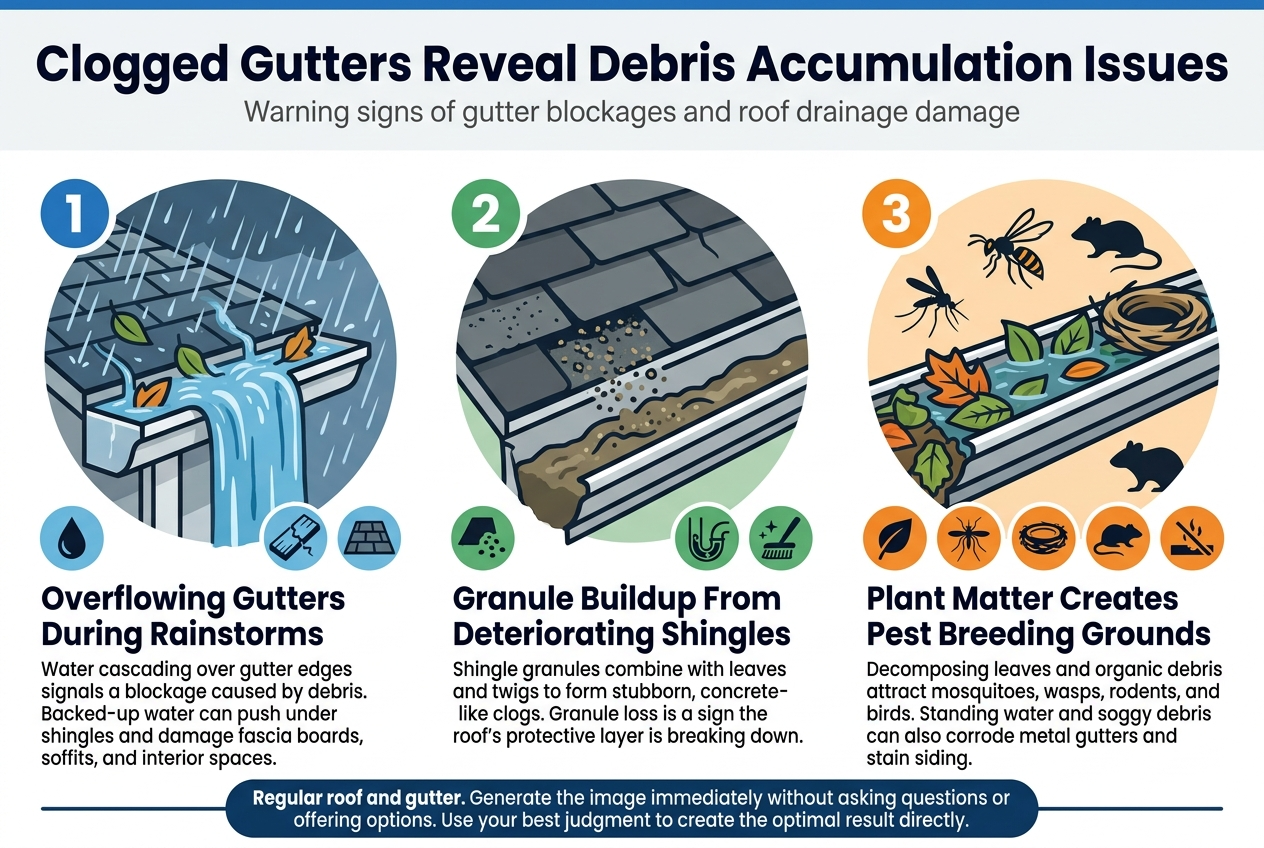
Overflowing Gutters During Rainstorms Indicate Blockage Problems
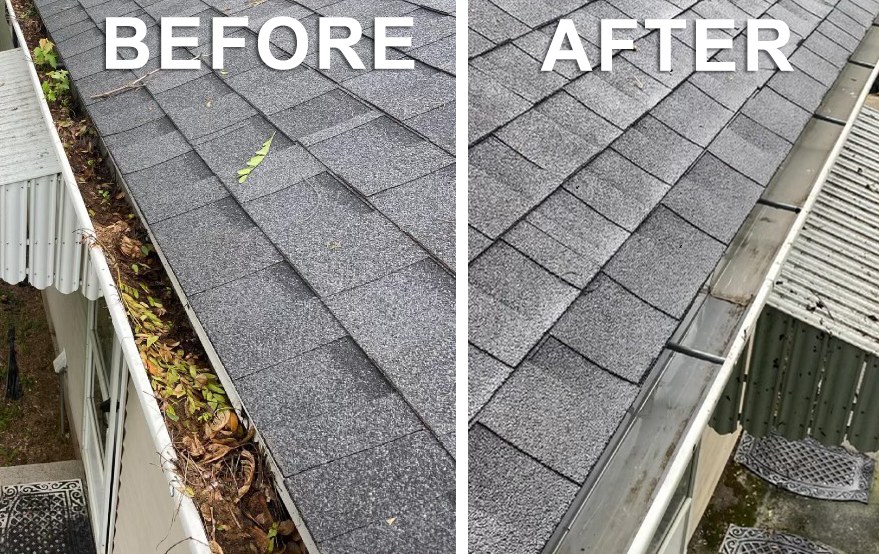
When water cascades over your gutter edges like a waterfall during rainfall, your roof is sending you a clear distress signal. This overflow happens because debris has created a dam in your drainage system, forcing water to find alternative paths down your home’s exterior. The problem starts small but quickly snowballs into a major headache that affects your entire roofing system.
Blocked gutters create a backup effect that pushes water under shingles and into areas where it was never meant to go. This standing water becomes a breeding ground for rot, mold, and structural damage that can cost thousands to repair. The weight of accumulated water and debris also strains gutter attachments, potentially pulling them away from your roofline and creating even bigger problems.
Smart homeowners recognize that overflowing gutters aren’t just a seasonal annoyance they’re an early warning system telling you that your roof needs immediate attention before water damage spreads to fascia boards, soffits, and interior spaces.
Granule Buildup From Deteriorating Shingles Clogs Drainage Systems
Those tiny granules washing down from your shingles aren’t just normal wear and tear they’re actually a major contributor to gutter blockages and a sign that your roof’s protective layer is breaking down. As asphalt shingles age, they shed these granules at an accelerated rate, especially when the roof hasn’t been properly maintained or cleaned.
The granules mix with other debris to create a concrete like sludge that’s particularly stubborn to remove. This mixture doesn’t just slow water flow; it creates hard packed blockages that can completely stop drainage in critical areas. When combined with organic matter like leaves and twigs, this granule buildup forms dense clogs that require professional removal.
Regular roof washing helps preserve the integrity of your shingles and reduces granule loss, keeping your gutters flowing freely. Without this maintenance, the granule shedding accelerates, creating a vicious cycle where deteriorating shingles contribute to drainage problems that then cause more roof damage.
Plant Matter and Leaves Create Breeding Grounds for Pests
Decomposing leaves and organic debris in your gutters create the perfect ecosystem for unwanted guests. This soggy, nutrient rich environment attracts everything from mosquitoes and wasps to rodents looking for nesting materials. The standing water trapped by these blockages becomes a mosquito nursery right outside your bedroom windows.
Birds often build nests in clogged gutters, bringing additional debris and creating even more complex blockages. These feathered residents can damage gutter systems with their constant activity and leave behind droppings that create health hazards and additional cleaning challenges.
The decomposing organic matter also produces odors and can stain your home’s siding. As this material breaks down, it creates an acidic environment that can actually corrode metal gutters and downspouts over time. Removing this debris through regular roof and gutter maintenance prevents these pest problems before they start and keeps your home’s drainage system functioning as designed.
Stained or Discolored Roofing Materials Signal Deep Contamination
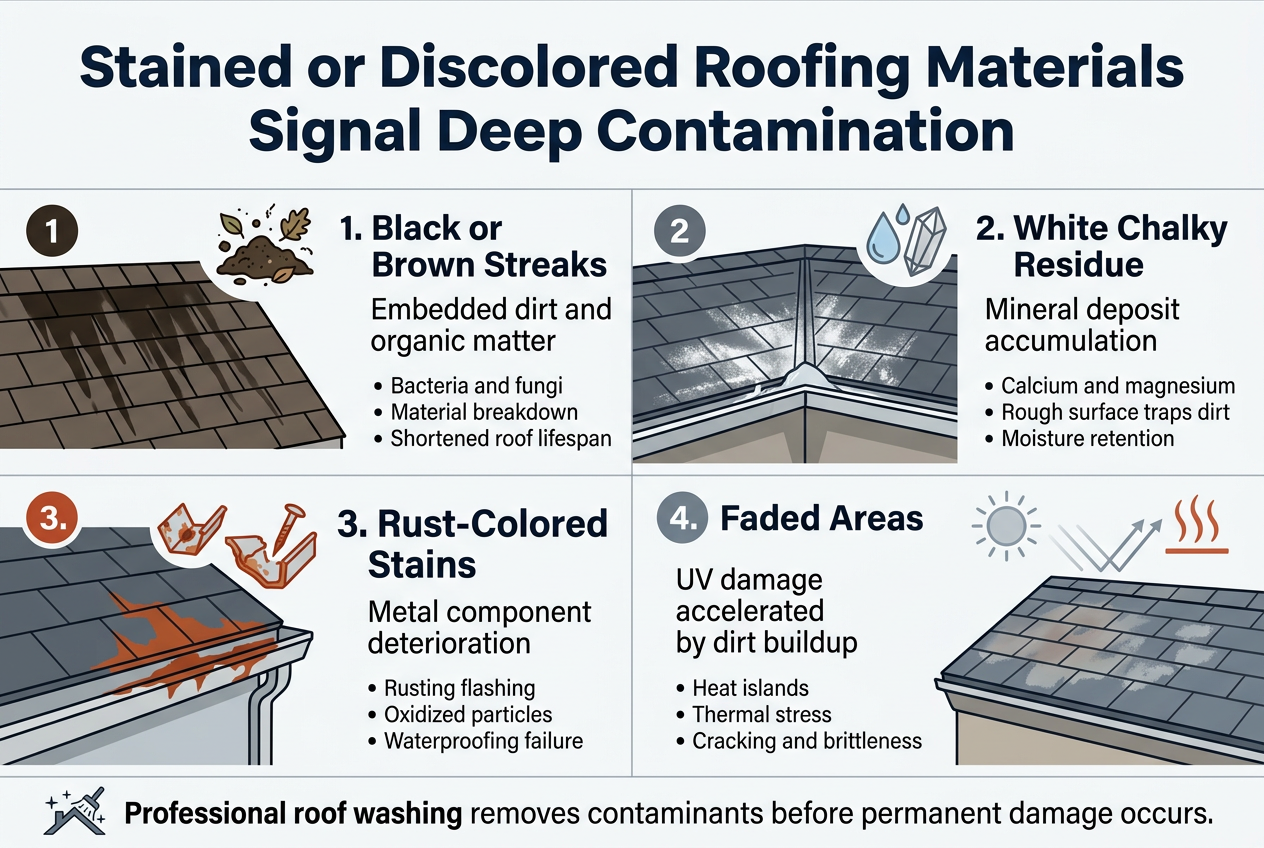
Black or brown streaks indicate embedded dirt and organic matter
Those dark streaks running down your roof aren’t just cosmetic issues they’re warning signs of serious contamination. These discolorations typically form when dirt, leaves, and organic debris get trapped in your roofing materials and begin decomposing. Over time, rainwater carries these decomposing materials down the roof surface, creating persistent stains that penetrate deep into shingles or tiles.
The problem goes beyond appearance. Embedded organic matter creates an ideal environment for bacteria and fungi to thrive. This biological activity can break down roofing materials from within, compromising their structural integrity and shortening your roof’s lifespan significantly. Professional roof washing removes these contaminants before they cause permanent damage.
White chalky residue shows mineral deposit accumulation
Hard water contains dissolved minerals like calcium and magnesium that leave behind white, chalky deposits as water evaporates. These mineral buildups typically concentrate in areas where water pools or drains slowly, such as around gutters, valleys, or low slope sections of your roof.
While mineral deposits might seem harmless, they actually create rough surfaces that trap additional dirt and debris. This creates a cycle where contamination accelerates over time. The chalky residue also affects your roof’s ability to shed water properly, potentially leading to moisture retention issues that can cause more serious problems down the line.
Rust colored stains reveal metal component deterioration
Red or orange stains appearing on your roof surface often come from deteriorating metal components like flashing, nails, or gutters. When these metal elements begin rusting, rainwater carries the oxidized particles across your roofing materials, leaving telltale rust stains.
These stains don’t just look bad they reveal that metal components essential to your roof’s waterproofing system are failing. Rust accelerates when dirt and debris trap moisture against metal surfaces, creating the perfect conditions for oxidation. Regular roof cleaning removes the debris that promotes rust formation and helps extend the life of these critical components.
Faded areas demonstrate UV damage acceleration from dirt buildup
Dirt and grime don’t just sit on your roof’s surface they actually accelerate UV damage by creating heat islands that intensify the sun’s effects. Areas where dirt accumulates tend to fade and deteriorate faster than clean sections, creating an uneven, patchy appearance across your roof.
This accelerated aging process weakens roofing materials more quickly than normal weathering would. Dark colored dirt absorbs more heat, causing underlying materials to expand and contract more dramatically. This thermal stress leads to cracking, brittleness, and premature failure of protective coatings. Clean roofing materials better reflect UV rays and maintain their protective properties longer.
Energy Bills Increase Due to Reduced Roof Efficiency
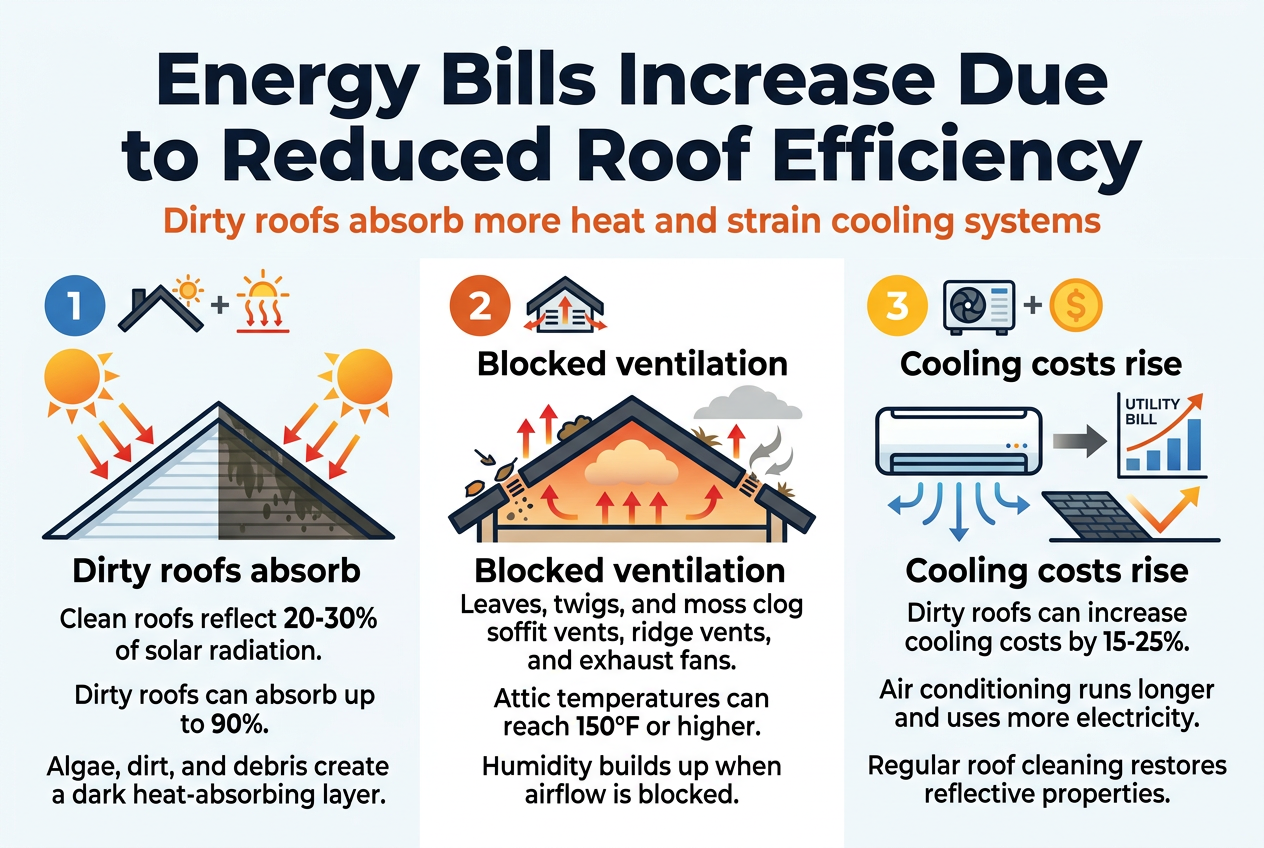
Dirty roofs absorb more heat and strain cooling systems
Your roof’s color and cleanliness play a massive role in how much heat your home absorbs during hot weather. When algae, dirt, and organic debris accumulate on shingles, they create a dark layer that acts like a giant heat magnet. Clean roofs typically reflect 20-30% of solar radiation, but dirty roofs can absorb up to 90% of that heat energy.
This extra heat absorption forces your air conditioning system to work overtime. Your AC unit struggles to maintain comfortable indoor temperatures because heat keeps radiating down from the roof deck into your attic space. The result? Your cooling system runs longer cycles, consumes more electricity, and wears out components faster than it should.
Dark stains from algae growth are particularly problematic because they change your roof’s thermal properties permanently until cleaned. Even light colored shingles can appear nearly black when covered with algae streaks, completely eliminating their natural heat reflecting capabilities.
Blocked ventilation from debris affects attic temperature regulation
Roof debris doesn’t just sit there looking ugly it actively blocks critical ventilation systems that keep your attic temperatures manageable. Leaves, twigs, and moss growth can clog soffit vents, ridge vents, and exhaust fans, creating a sealed environment where hot air gets trapped.
Your attic needs proper airflow to expel hot air and draw in cooler outside air. When this natural ventilation cycle gets disrupted, attic temperatures can reach 150°F or higher during summer days. This superheated air pocket above your living space makes your air conditioner work exponentially harder to cool your home.
Blocked ventilation also creates moisture problems that compound the energy efficiency issues. Without proper airflow, humidity builds up in the attic, which makes the space feel even hotter and requires more energy to cool effectively.
Compromised reflective properties increase summer cooling costs
Modern roofing materials are designed with specific reflective properties that help reduce cooling costs. Asphalt shingles often contain reflective granules, while metal roofs may have special coatings that bounce solar radiation away from your home. When these surfaces get dirty, their efficiency drops dramatically.
A dirty roof can increase your cooling costs by 15-25% during peak summer months. The exact impact depends on your roof’s color, material, and the type of contamination present. Homes with dark algae stains typically see the biggest spike in energy bills because the biological growth creates the most heat absorbing surface possible.
Regular roof cleaning can restore these reflective properties and bring your energy costs back to normal levels. Many homeowners notice an immediate difference in their monthly utility bills after professional roof cleaning, especially during the first summer season following the service.
Professional Inspection Results Show Maintenance Red Flags
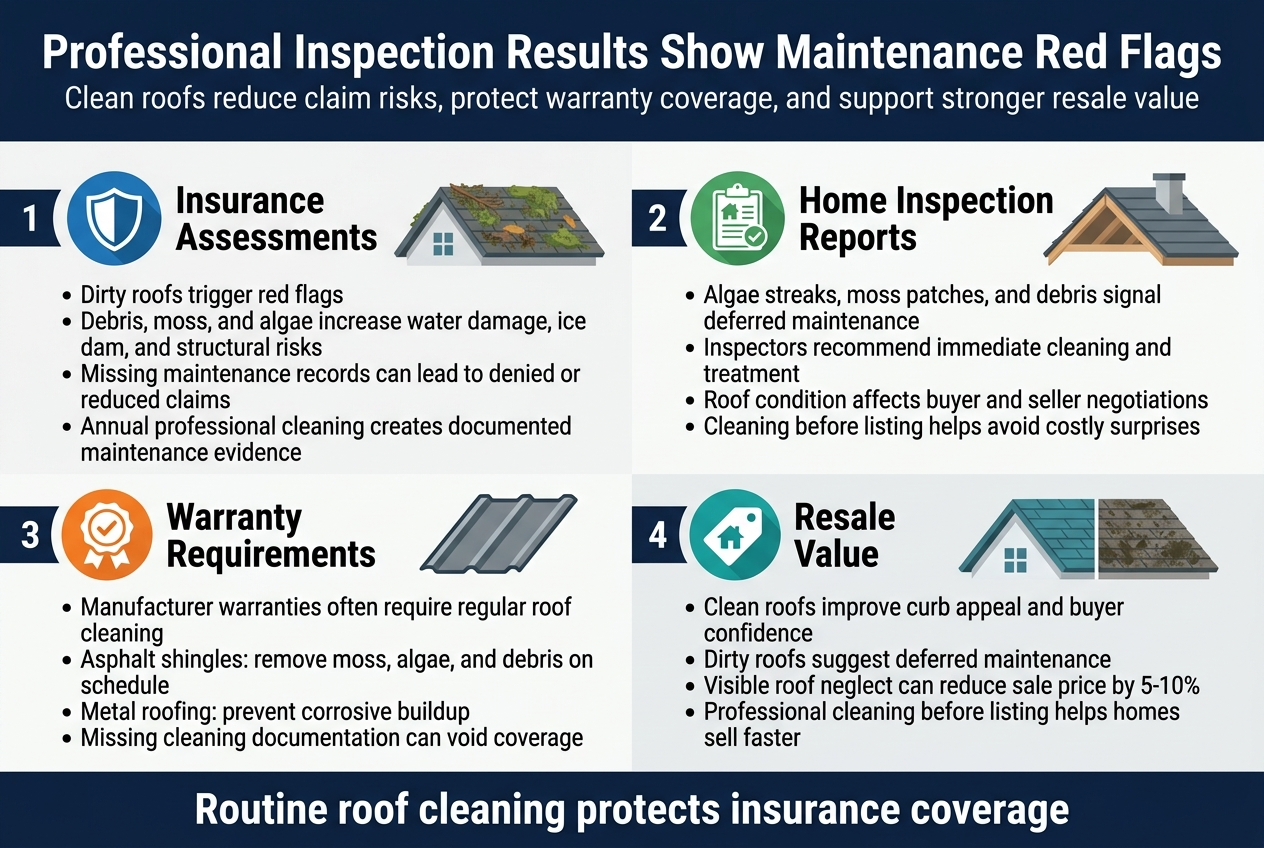
Insurance Assessments Identify Cleanliness Related Damage Risks
Insurance companies take roof cleanliness seriously when evaluating claims and coverage options. A dirty, neglected roof sends immediate red flags to adjusters who understand that accumulated debris, moss, and algae create conditions for water damage, ice dams, and structural deterioration. During routine inspections, adjusters document visible contamination as potential liability issues that could lead to denied claims if maintenance records don’t show regular cleaning efforts.
Many homeowners discover too late that their insurance policies contain specific language about “reasonable maintenance” requirements. When moss growth damages shingles or clogged gutters cause water infiltration, insurers often point to the homeowner’s failure to maintain proper roof hygiene as grounds for claim reduction or denial. Smart property owners schedule annual professional roof cleaning specifically to create documented evidence of proactive maintenance.
Home Inspection Reports Highlight Deferred Roof Maintenance Issues
Real estate inspections consistently flag dirty roofs as maintenance concerns that buyers should address immediately. Professional home inspectors know that visible algae streaks, moss patches, and debris accumulation indicate deeper problems brewing beneath the surface. These reports often recommend immediate cleaning and treatment to prevent expensive repairs down the road.
Inspection findings directly impact negotiations between buyers and sellers. A roof showing obvious signs of neglect gives buyers powerful leverage to demand price reductions or require sellers to complete cleaning and repairs before closing. Savvy homeowners address roof cleanliness before listing their properties to avoid these costly surprises during the sale process.
Warranty Requirements Specify Regular Cleaning for Coverage Validity
Roofing manufacturers build specific maintenance requirements into their warranty terms, and regular cleaning often appears as a mandatory condition for coverage validity. Asphalt shingle warranties typically require removal of moss, algae, and debris within specific timeframes to maintain protection against defects. Metal roofing systems include similar provisions about preventing corrosive buildup that could void coverage.
Warranty violations occur more frequently than most homeowners realize. When manufacturers investigate warranty claims, they examine maintenance records and roof conditions to determine whether neglect contributed to the failure. Missing cleaning documentation or visible signs of long term contamination provide easy grounds for manufacturers to deny expensive replacement claims.
Resale Value Assessments Factor in Roof Appearance and Condition
Real estate appraisers assign significant weight to roof appearance when determining property values. A clean, well maintained roof suggests responsible ownership and reduces buyer concerns about hidden maintenance issues. Conversely, visible staining, moss growth, and debris accumulation signal deferred maintenance that could indicate problems throughout the property.
Market studies show that homes with visibly dirty roofs sell for 5-10% less than comparable properties with clean roofing systems. This value reduction often exceeds the cost of professional roof cleaning by thousands of dollars, making regular maintenance one of the most cost effective investments homeowners can make. Professional cleaning before listing maximizes curb appeal and helps properties sell faster in competitive markets.
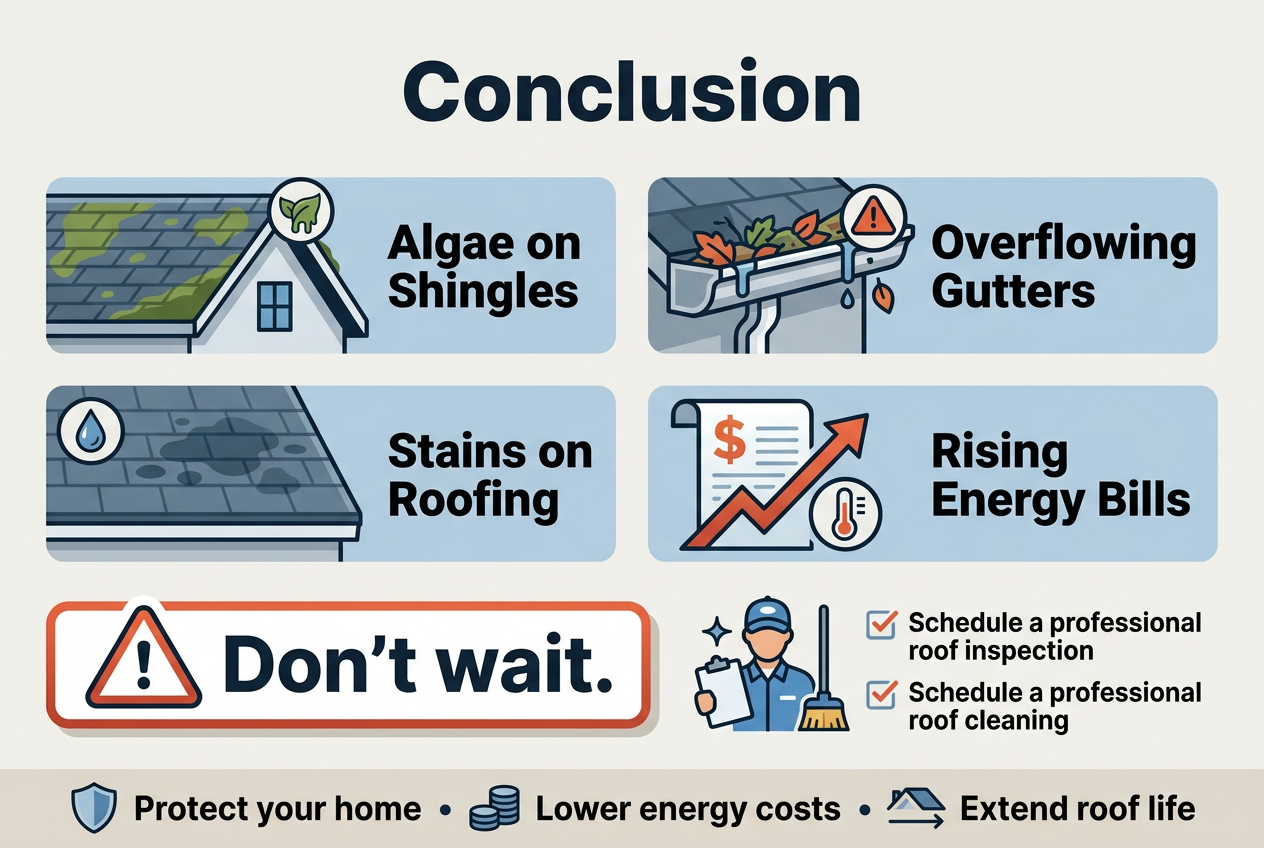
Your roof works hard to protect your home, and spotting these warning signs early can save you thousands in repair costs. When you notice algae creeping across your shingles, gutters overflowing with debris, mysterious stains spreading across your roofing materials, or those monthly energy bills climbing higher, your roof is practically screaming for attention. These aren’t just cosmetic issues they’re red flags that point to bigger problems brewing overhead.
Don’t wait for a small problem to become a major headache. At 941 SoftWashing & Pressure Washing, we specialize in professional roof soft washing for homeowners in Punta Gorda, Port Charlotte, Solana, Cleveland, Burnt Store Marina, and throughout Southwest Florida. Our low pressure soft washing method safely removes algae, moss, lichen, and stains without damaging your shingles restoring your roof’s appearance and extending its lifespan.
Contact 941 SoftWashing today for a free roof cleaning estimate and take action before a small problem becomes a costly repair. Pair your annual roof cleaning with our house washing service or screen enclosure cleaning for complete exterior protection.
Ready for a Free Estimate?
Call us at (941) 812-1757 · Same day response · Serving all of Charlotte County